- "01-Prologue_F". Released: 2025.

Audio Guide _Walkthrough
Prologue
Welcome to Thukral and Tagra’s exhibition. This guide serves as an audio companion to help you navigate the space.
Thukral and Tagra explore the idea of play as a psychological, social, political, and internal condition shaped by the anxieties of our present moment. Their practice over these two decades has engaged with questions of migration, displacement, and ephemerality through painting, archiving, gaming, and publishing.
Games People Play is conceived as a playtest in exhibition-making — a curatorial gameboard that unfolds over ten days through ten works. Each day focuses on a new state, whether emotional (vulnerability, anxiety, hope, reverie) or structural/mental (belief, speculation, conjecture, adaptivity, resilience, care). Together, they create a shifting map where artworks are not static objects but move in play, growing with each day and transforming the rhythm of the exhibition. Visitors are invited to explore this evolving field, examining how feelings and processes interact and how, in turn, we influence the rules of the game.
The first iteration, presented in 2015 at Dr. Bhau Daji Lad Museum, Mumbai, was conceived as an institute-as-arena for cultural reflexes — a lens to observe how we perform, negotiate, and perceive cultural matters.
Thukral and Tagra stage new situations by drawing on strategies of relational art: a participatory format of public engagement. Within this space, viewers are invited to bring forth their hate and transform it into acts of care. The familiar game of ping pong is transformed from a pastime of competition to a site of reflection. Another work, ‘Assets and Liabilities’, reconfigures demonetised Indian currency into the surface of a table-tennis table, inviting viewers to play across the residues of an evolving economy. Here, the Game of Table Tennis becomes a metaphor for life and death, lullaby and lament.
Work I
VULNERABILITY
“Working together for more than two decades has meant learning to be vulnerable with each other—trusting that ideas can be fragile, that they need care, time, and patience to grow. Every morning in the studio begins with what was left unfinished, and then, with a kind of tenderness, something new takes shape.
Here, two tables wait for you. They are not just objects, but an invitation—to play, to share in this rhythm, and perhaps to feel that same openness with us.”
Assets and liabilities:
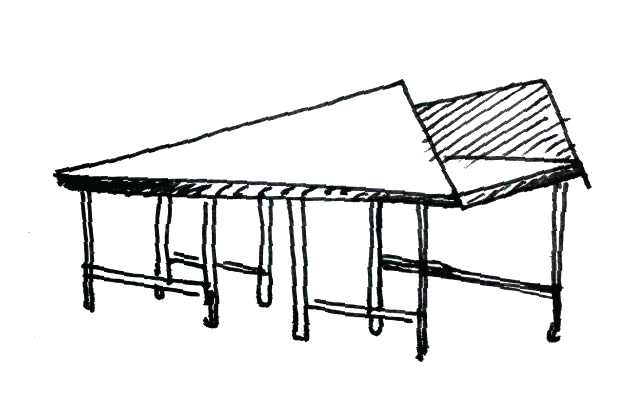
A table tennis table modded, like a paper plane, its surface patterned with demonetised notes. While still playable at regulation scale, the table is no longer neutral ground. As one side collapses into fragility, the other expands into uneven panels. This skewed arena echoes the volatility of economies, where paper wealth can vanish and rules tilt the game in unexpected ways. By staging a play on a field literally built from invalid money, the work asks: are we competing for points, or merely rallying on the ruins of value?
Trust and betrayal (by self):
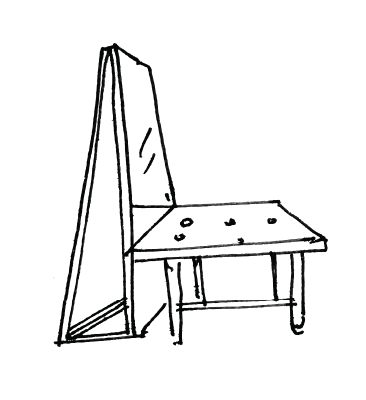
Here, the table turns inward: mirrored panels reflect the player at themselves, while holes swallow the ball mid-rally. The game becomes a dialogue with one’s own image, an endless rally of advantage and collapse, presence and absence. In this unstable arena, the rules dissolve into futility. The work asks: when we play only against ourselves, can trust ever survive betrayal?
Work II
ANXIETY
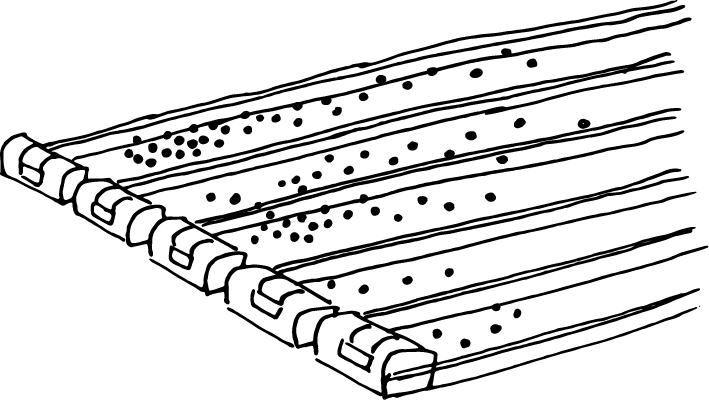
Lullaments: This 40-foot-long work is a kinetic work that, through a to-and-fro motion, a continuous push and pull, develops into a droning rhythmic hum. The repetition alleviates anxiety and also offers a therapeutic sensation of calm and pleasure. The sound can be imagined as both lament and lullaby, carrying a restorative, resounding quality for the contained self.
Lullabies typically guide us through the waking–sleeping transition; here, they also gesture toward the passage between life and death.
Combining lullabies and lament – we came up with a lullaments!
Work III
BELIEF
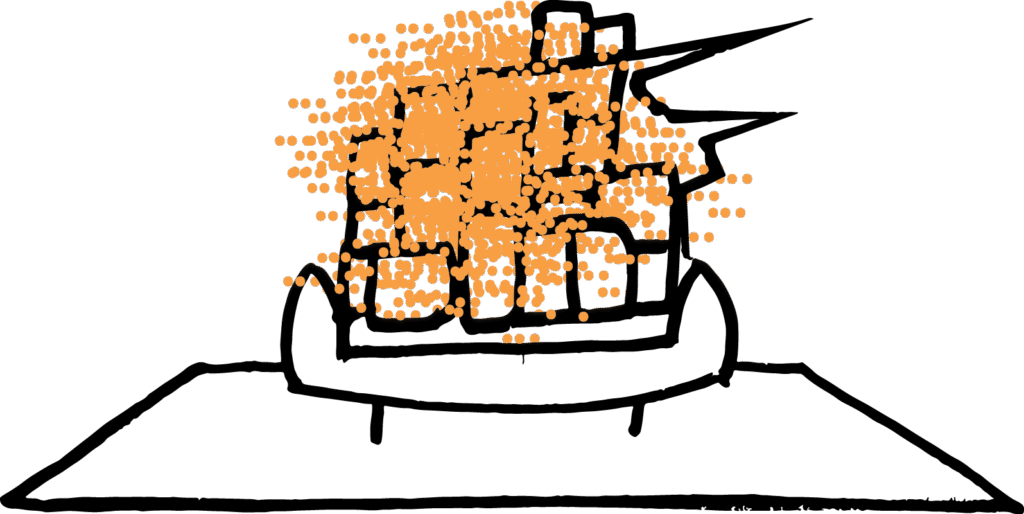
Monuments of Time: The character of a ball is that of an unsettled being, ever moving and evolving. Resting tightly against one another, these forms connect through a shared ‘belief’ and can be read as social structures held together by compassion and commitment. They may appear as institutions, faith systems, families, clusters of thoughts, or simply as arrangements shaped with care.
The binding of each unit recalls the meditative rhythm of prayer beads, where every ball marks a moment in time. The installation allows forms within a stack of domestic objects, while incorporating furniture and tools from the studio. Together, these elements act as traces of the artist’s practice and as extensions of daily life, linking the intimacy of making with the larger rhythms of thought and contemplation.
Work IV
SPECULATION
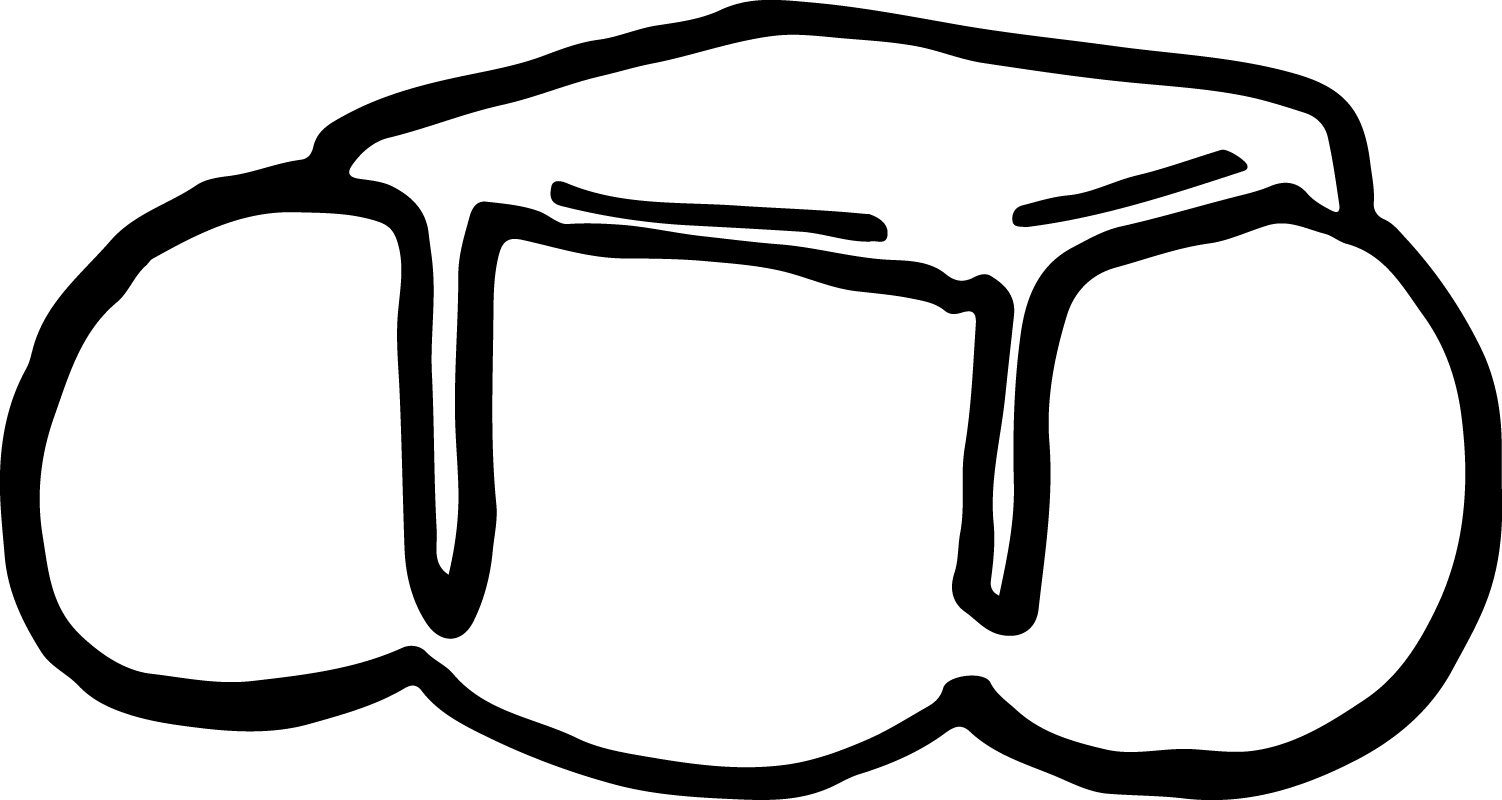
Bubble Under the Table (first shown at Arario Gallery, Seoul, 2010)
Bubble Under the Table Family discussions about aspirations and the future often unfold around the dining table. They are at once about imagining a plausible future while grounding themselves in the present. Bubble Under the Table was conceived for the solo exhibition Middle Class Dreams at Arario Gallery, Seoul.
The work emerges from a personal memory of school days, where many children were reluctant to study because they had been briefed from an early age: their future lay abroad, where a “better life” supposedly awaited them. This undercurrent of aspiration, hidden yet ever-present, became the bubble under the table.
Work V
REVERIE
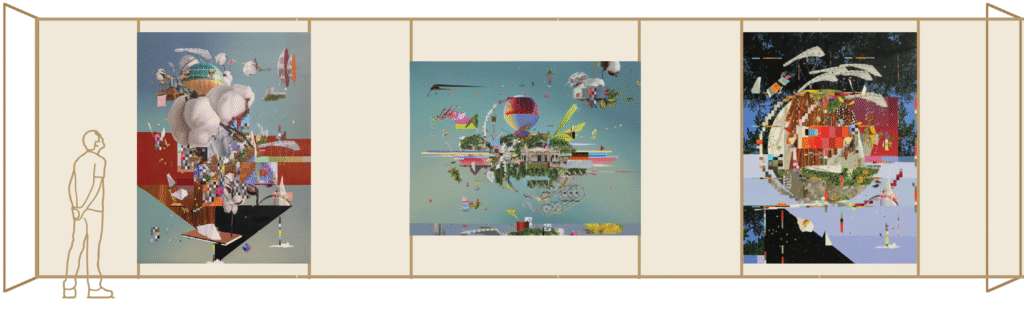
Dominus Aeries has been a continuous series, a meditation on reveries of migration, desire, and nostalgia. A gradient of colour spreads across oil on canvas, worked with meticulous brushstrokes to weave together a story, your story, and a speculative one. Each painting is a fragment of this reverie, returning to a landscape now transformed, where the image of home lingers and the hot air balloon of desire pulls and guides the way. In these shifting terrains, we are reminded that change shapes us as much as we shape it.
Here, displayed within a temporary structure, the three works converge as a triptych, scenes from a reverie. Resisting the confines of pre-existing categories, they flow into one another, forming a continuum of experience that dissolves boundaries and expands into a shared imaginary.
Work VI
CONJECTURE
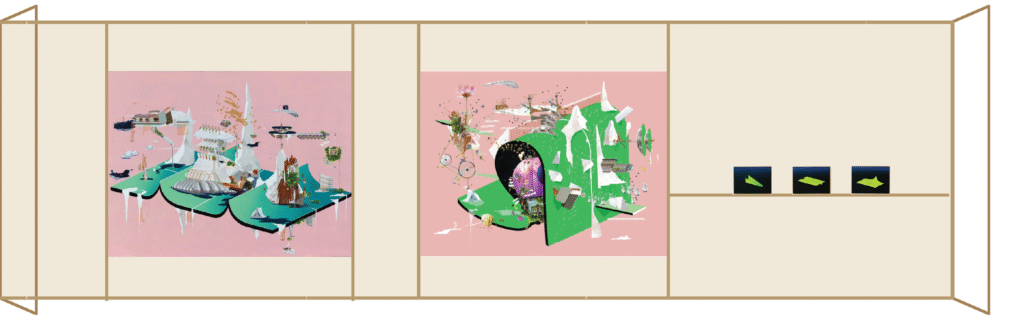
Conjecture:
A series of paintings, to believe on uncertain or tentative grounds. You see table tennis tables in numerous possibilities. As a community, we stand at a juncture of uncertainty, seeking new avenues through comfort and care, and in doing so, attempt to provide ourselves with purpose.
Conjecture is a decade-long investigation into migration, ephemerality, social reality, and acts of survival.
Extending the studio practice through the vocabulary of play, circumflex table-tennis structures are poised in a fragile act of resilience, reflecting times of vulnerability. Their surfaces attempt to bear the weight of a limitless cosmos. The only silver lining to self-drawn borders lies in the immediacy of living moments forming into new ones.
The viewer’s journey here is precarious, always threatening to slip or dissolve between the gaps of time and space. Aspirations and anxieties propel us toward imagining plausible futures, while the spaces between matter reveal the fragmented, unstable nature of our morphing reality.
Work VII
ADAPTIVITY

The Capsule puzzles together two ordinary habits at a time, producing strange new activities for the present condition of multitasking:
1. Weight Lifting / Reciting Poetry
2. Trampoline Jumping / Reading a Newspaper
3. Skipping Rope / Singing
4. Cycling/ Reading your bio/CV
These absurd pairings transform daily gestures into compressed exercises of body and mind. What begins as play quickly reveals satire — a capsule of our age, where the demand to juggle, balance, and perform multiple selves at once is constant. Each activity is both a rehearsal and a mirror: a choreography of divided attention, training us to question how much of life has already been scripted into multitasking as survival.
Work VIII
HOPE
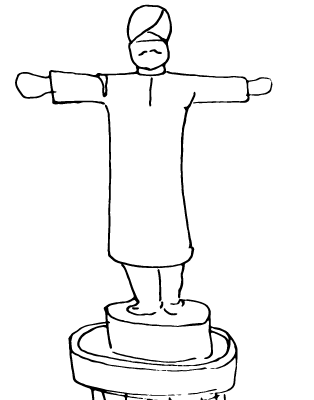
Sardar ji sculpture with ice forming in time:
In the corner stands a small sculpture, arms stretched out in that all-too-familiar pose from airport security, the great equaliser of our times. Everyone, no matter how noble or nervous, must awkwardly freeze while a stranger waves a beeping wand across their body. This figure recalls our uncle, Swatantur Singh, determined to fly abroad in search of a brighter future. Here, the ice frost creeping over him is not just climate but bureaucracy itself, file by file, scan by scan, reshaping his body, ambitions, and identity into something almost unrecognisable. Just another hopeful passenger, he holds the pose, still stubbornly standing against all odds.
Work IX
RESILIENCE
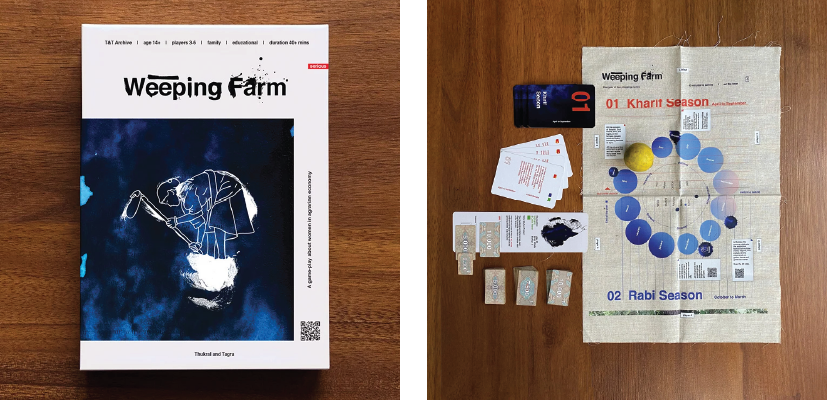
Weeping Farm
40 minutes for survival.
Weeping Farm explores the daily trials and tribulations of women farmers across India. Despite not being legally recognised as farmers, women are equal participants in farm labour. However, with evolving agrarian jurisdictions, privatisation, overdue debts, and climate change, farmers often face insurmountable odds in making ends meet. Weeping Farm acts as an intervention to familiarise the players with the realities of rural life. Each player takes on the character of a woman farmer from across India for two farming cycles – or one year. At the end of 40 minutes, the player with the highest amount of debt is out of the game – signalling how every 40 minutes, a farmer commits suicide.
Work X
CARE
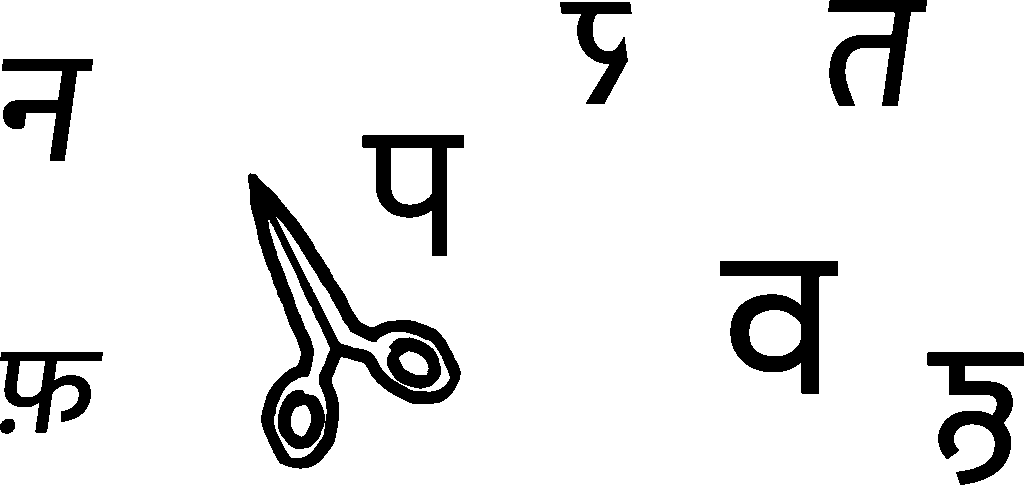
Nafrat/Parvah (Hate/Concern) is conceived as a space to hold two polarised sentiments that continue to shape our collective consciousness. What began as an experiment in collecting “hate objects” and returning them through gestures of care has since evolved into a sustained practice. Rather than a site of protest, the project offers a safe space to examine the language of hate, its vocabularies, aesthetics, and value systems, while simultaneously reimagining its opposite through acts of exchange.
At its centre is Nafrat/Parvah – A Barbershop, open for the duration of the exhibition, where visitors can book a “free” salon service. Instead of paying with money, participants barter with an object, service, or sentiment they “hate,” releasing negativity into circulation while receiving care in return.
Now in its third edition, the project continues to expand. At the Serendipity Arts Festival last year, it invited both volunteers and audiences to actively participate, transforming the work into a collective practice of reflection, generosity, and learning. In the present climate, marked by volatility and division, Nafrat/Parvah stands as a reminder that we must come together, educate ourselves, and organise. At its core, it is a call to turn hate into concern, and concern into care.
Steps to follow:
Recalibrate
Ongoing Collaboration
4 PM onwards — 6, 8, 11, 12 & 16 October
By Manju Sharma, Riya Mandal,
Parinay Mehra, Deepak Kurki
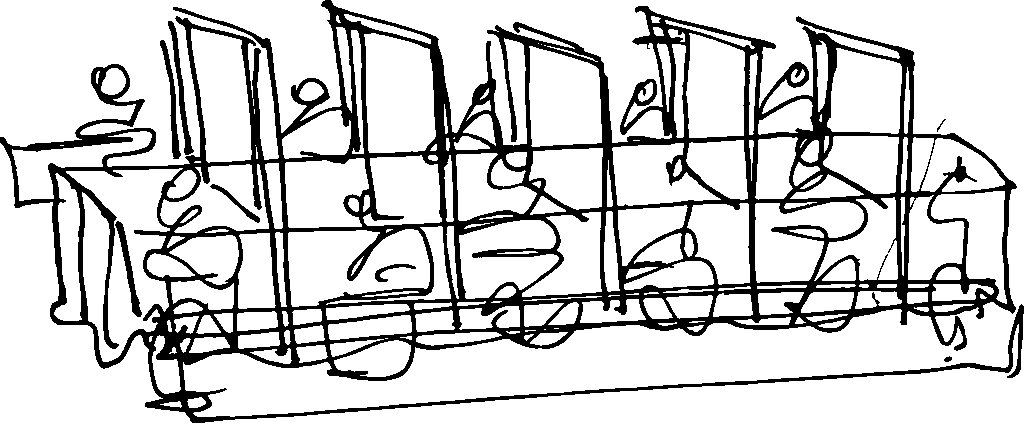
Pause. Turn. Move.
Altering the space happens through movement and stillness,
through play, and through pauses of reflection.
Pause. Turn. Jump.
What if the line between audience and artwork disappeared?
What if you became a player, not just a viewer?
With every gesture, interruption, and quiet interval, the familiar shifts. New associations are formed.
The energy of play pulses here, unguarded, sometimes awkward, always alive. Even the balls are part of this rhythm.
Tossed, rolled, played with, until the performance lasts.
Then they return to their places, holding the memory of your touch.
Pause. Turn. Run.
Recalibrate.
Word-Play
by SHALEEN WADHWANA,
Independent Arts Educator and Researcher
15 Seats only.
Registration Mandatory – No Fee Required,
Oct 12, Sunday, 3pm to 5pm
Word-Play is a 2-hour immersive curated tour personalised to audience responses to Games People Play. ‘Words’ submitted by participants are the anchor points of a layered tour conducted by Shaleen. Bias and imagination, present in all of us, are part of this word-play. Meaning-making will change as each artwork builds a larger framework of learning and unlearning in a sit-down discussion. The words you came with and the words you leave with will be worlds apart. Come join us and experience how word-play shapes our viewing of art and ourselves.
Sound design by Arjun and Raghav
Copyright 2025